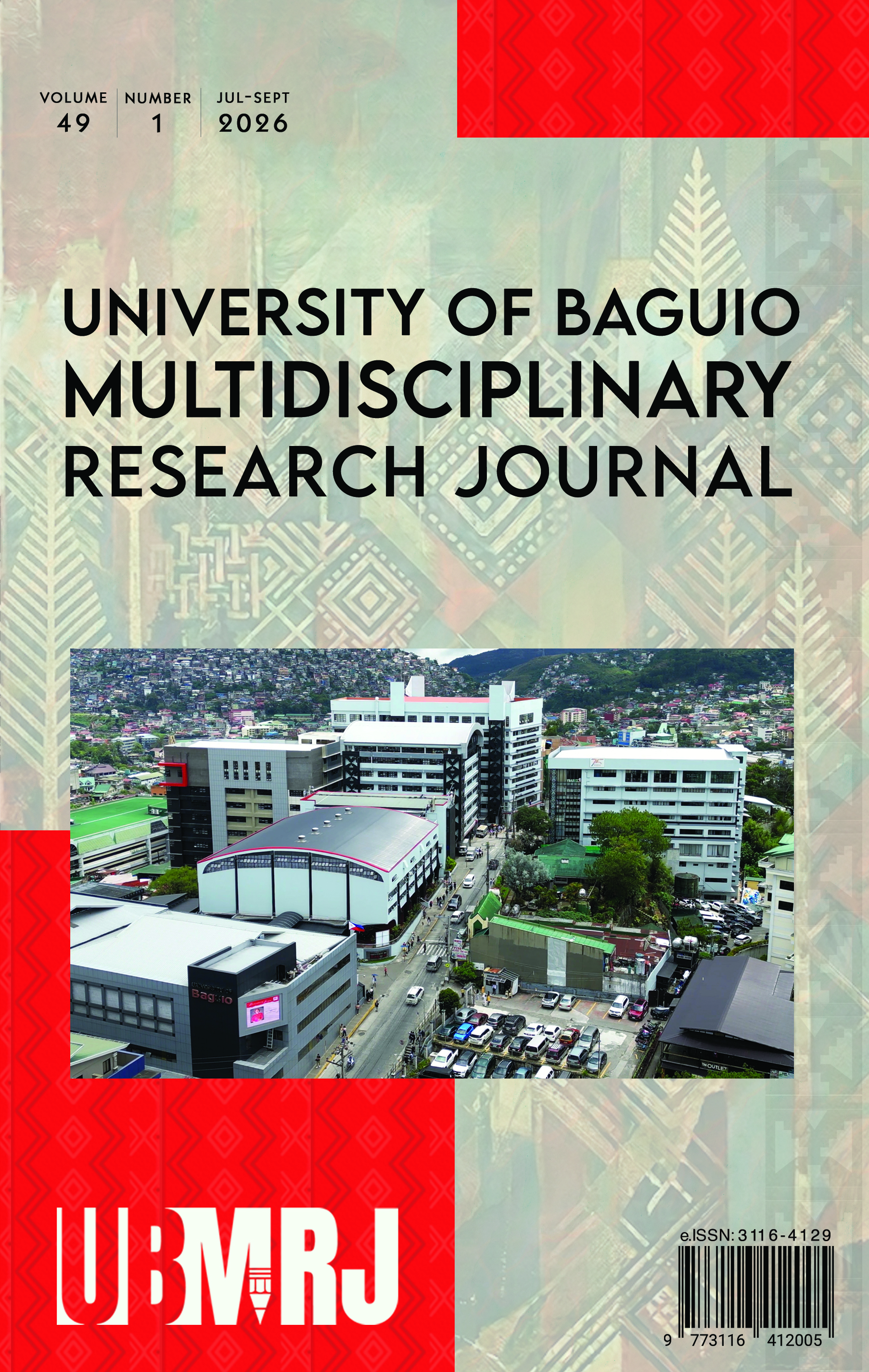
S.P.E.A.K.: Exploring self-regulated learning strategies for accelerating foreign language learning among college students
DOI:
https://doi.org/10.64055/b9mxe569Keywords:
acquisition, challenges, language, self-regulated, strategiesAbstract
This study investigated the self-regulated learning (SRL) strategies employed by BA English Language students at the University of Baguio in learning Mandarin, to identify which strategies most effectively address challenges in grammar, vocabulary, and phonology. While research on language acquisition is extensive, SRL strategies among Filipino foreign language learners remain underexplored. Using a qualitative descriptive design, semi-structured interviews were conducted with ten students enrolled in Foreign Language 3 (Mandarin). Data was thematically analyzed through deductive coding to capture learner experiences. Findings revealed that while grammar posed less of an issue due to orthographic unfamiliarity and influence from their first language, vocabulary acquisition was challenged by script complexity and retention issues. Phonology emerged as the greatest obstacle due to tonal distinctions and pronunciation difficulties. To address these, learners employed digital tools for grammar support, audiovisual immersion for vocabulary building, and technology-driven pronunciation aids for phonology. Repetition, imitation, and contextual practice further enhanced retention, fluency, and confidence. The study concludes that effective Mandarin acquisition depends less on the absence of difficulty and more on learners’ strategic responses to challenges. Self-regulated strategies, particularly digital integration, repetition, and multimodal practice, meaningfully accelerates progress. To disseminate these findings, an informational video was created, with a learner-friendly framework to guide students and educators in applying SRL strategies effectively.
Downloads
Published
Issue
Section
License
Copyright (c) 2026 University of Baguio Multidisciplinary Research Journal

This work is licensed under a Creative Commons Attribution-NonCommercial-NoDerivatives 4.0 International License.